
 +61 410 152 276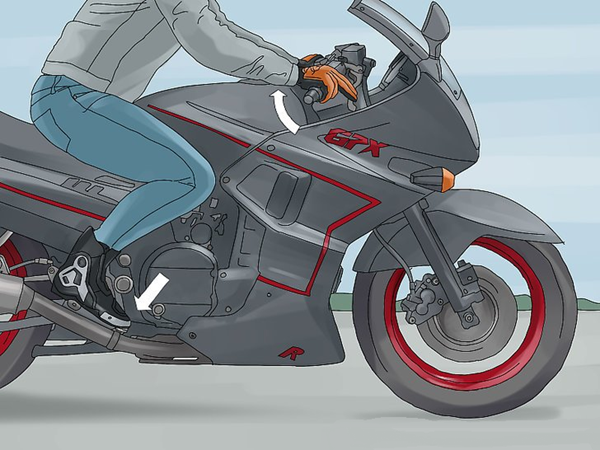
What Brake to Use When and How
So, you’re riding along and need to slow down or stop. Which brake should you use — the front, the rear, or both? Following on from my previous article about the rear brake, I’ve received a few comments and questions about brake use. Some riders — especially racers — will almost exclusively use the front brake, and some even remove the rear brake entirely to save weight. Others claim they hardly touch it at all.
At BikeSAFE Motorcycle Training, we take a balanced approach. We teach riders to understand when and how to use the rear brake, and when to rely more on the front. Motorcycle riding is a skill that depends on quick judgment. Choosing the wrong braking method in the wrong situation can cause a fall, injury, or worse. To make it simple for learners, I like to associate braking with two words: Slow and Fast.
Slow = Rear brake.
The rear brake is operated by your right foot. At slow speeds, it’s your stabiliser. It helps with U-turns, tight corners, and manoeuvring through traffic or around a roundabout. Because your natural reaction in a panic is to stomp your foot, it’s vital to understand that the rear brake can be dangerous at high speeds if pressed too hard.
Fast = Front brake.
The front brake is operated by your right hand. At higher speeds, this is the brake that does most of the work. Used correctly, it’s powerful and effective. Used incorrectly — especially with the wheel turned or the bike leaned over — it can cause a lock-up and a fall.
Applying the Logic in Real Situations
- Low speed manoeuvres: When you’re moving slowly, performing a U-turn, or cornering as a novice rider, use the rear brake for stability.
- Moderate speed (e.g., 80 km/h) and slowing down: Use the rear brake to settle the bike and engine braking through downshifting to reduce speed smoothly.
- High speed, slowing down but not stopping: Use both brakes. Apply the rear gently to avoid lock-up and let the front brake do most of the work. Add a controlled downshift if appropriate.
- High speed emergency stop: Rely primarily on the front brake. The rear brake can assist, but must be used carefully to avoid skidding. Downshifting is optional—don’t let it distract from stopping as quickly and safely as possible.
- One technique I teach is to think “squeeze” rather than “stop.” The word stop can encourage abrupt inputs, whereas squeeze promotes the smooth, progressive brake application needed for maximum control.
- As you say:
- “Squeeeeze”
- gradually increase pressure on the front brake. As you reach the “…ze”, gently introduce the rear brake. This creates a natural sequence: front brake first, rear brake second.
- The objective is still to stop as quickly as possible, but by focusing on a smooth, progressive squeeze rather than a sudden grab, riders are more likely to achieve maximum braking performance while maintaining stability and control.
The key is understanding that braking is not just about slowing down; it’s about choosing the right technique for the situation to stay in control of the motorcycle.
If you have questions or experiences to share, feel free to reach out to us via our Contact Us page.
Stay safe. Be BikeSAFE.