
 +61 410 152 276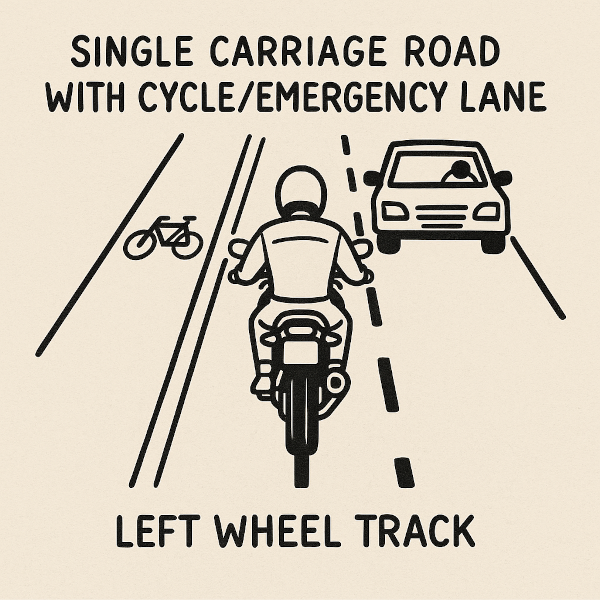
Motorbike Driving Lessons – Road Position
One of the most common questions asked by new riders is: “What is the best road position to be in?” The answer is simple: the safest position.
At BikeSAFE Motorcycle Training, we teach riders to take ownership of their lane by positioning themselves in the dominant track position. Much like controlling the “T” in a squash court, you ride possessively — not aggressively. This makes you more visible, more predictable, and harder to be overtaken unsafely.
The core strategies are straightforward:
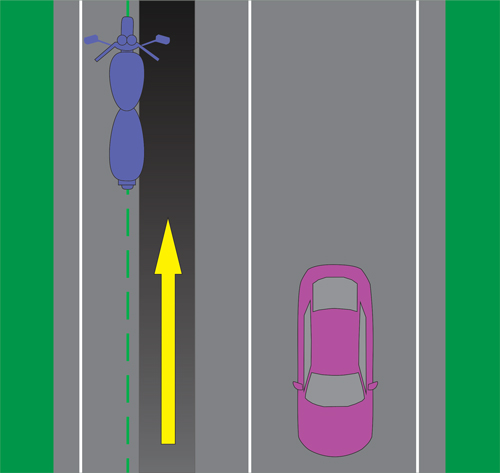
- Left Lane → Right Track
- Right Lane → Left Track
Defining Lanes and Tracks
Some instructors use the terminology P1, P2, P3 to describe the left, centre, and right tracks of a lane. Personally, I avoid this jargon as I find it adds unnecessary complexity — clear terms like left, centre, and right track are easier to understand and apply in real riding situations.
A road lane is defined as the portion of road allocated to one direction of travel, separated by a visible, physical, or implied divider. Within that lane, we can break the space down into three distinct tracks:
- Left Track (P1): the section where the left wheels of a car typically travel.
- Centre Track (P2): often called the drip line, since this is where oil and fluids from vehicles tend to collect.
- Right Track (P3): the section where the right wheels of a car typically travel.
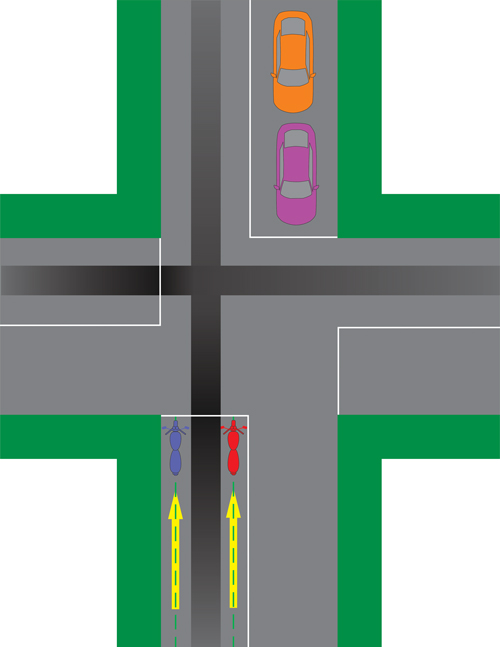
The drip line becomes particularly hazardous at stopping points — intersections, traffic lights, and stop signs — where vehicles sit idling and deposit more oil. Over time, this creates what we call an oil slick. For motorcyclists, the centre track can be especially risky when braking or slowing down, as the reduced traction increases the chance of a skid.
As a general strategy, avoid riding directly on the drip line, and be especially cautious when approaching areas where oil slicks are most likely to be present.
Key Road Positioning Strategies
When you ride, always be aware of what’s ahead and around you:
- Scan the road surface for hazards (gravel, oil, debris, wet patches).
- Look ahead for vehicles, side-road hazards, and intersections.
- Assess the road structure (lanes, markings, shoulders) and adjust your track position accordingly.
Practical Examples
Figure 1 – Unmarked Roads
On quiet residential or unmarked roads, riding in the middle of your lane (the oil line) often provides the safest buffer — far enough from both the kerb and oncoming traffic.
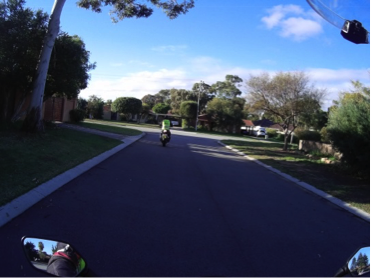
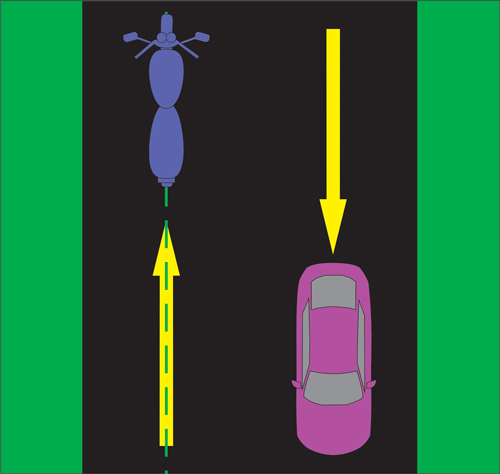
Figure 2 – Left Lane, Right Track
When riding in the left-hand lane, position yourself in the right track (alongside the lane divider). This maximises visibility, discourages unsafe overtaking, and makes lane changes simple.
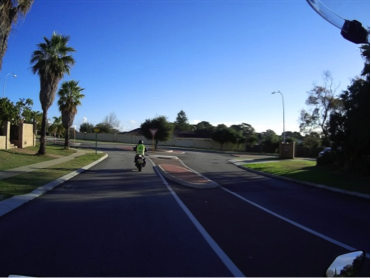
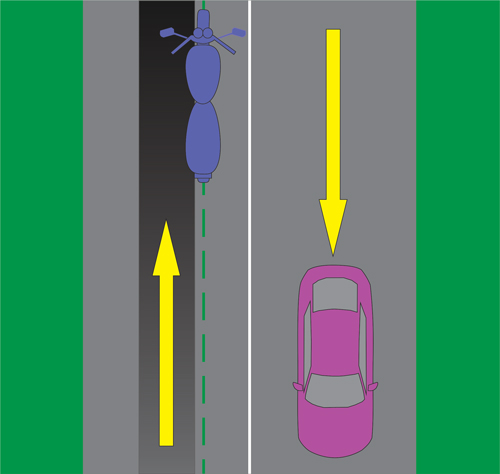
Figure 3 – Right Lane, Left Track
In multilane situations where you’re in the right lane, stay in the left track. This creates space buffers on both sides and makes you visible to oncoming traffic and vehicles behind.
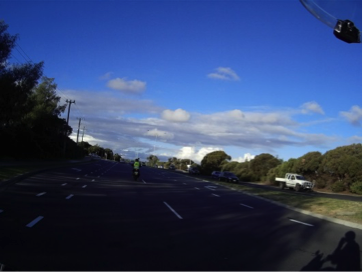
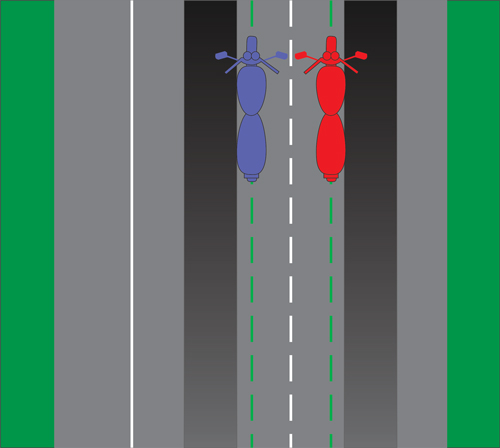
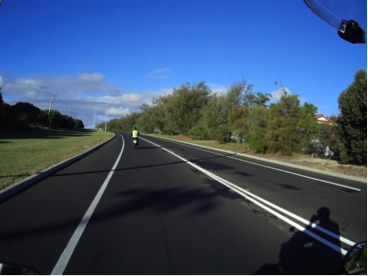
Figure 4 – Single Carriage Road with a Cycle/Emergency Lane
On roads with a cycle or emergency lane, I treat that lane as if it were the left lane and the main car lane as the right lane. My strategy in this situation is to ride in the left-hand wheel track of the car lane, right alongside the cycle lane. This position effectively places me near the centre of the road surface, giving me flexibility to move left or right as needed. It also increases my buffer from oncoming traffic. When approaching a roundabout, this track provides a straighter entry line, allowing for smoother and safer passage through the roundabout.
The Caveat – Adapt to Hazards
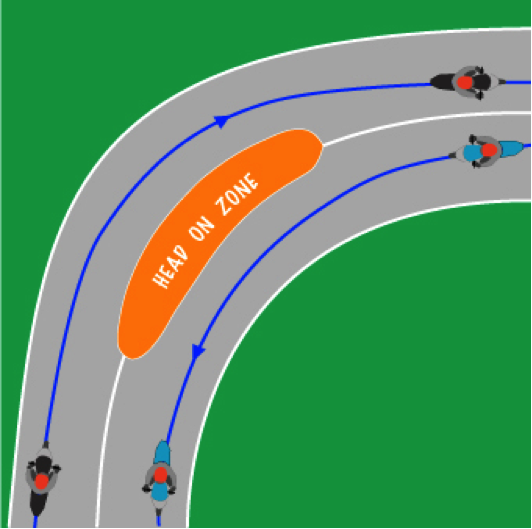
While these positioning strategies are reliable, you must always adapt to the conditions around you. If a hazard appears — such as a blind corner or an oncoming vehicle drifting wide — move away from the collision zone into a safer track. Likewise, if you are riding close to the centre line and notice a large vehicle approaching from either direction, adjust your position to create more space and reduce risk. Road positioning is never static; it’s about constant awareness and adapting to keep yourself visible, predictable, and safe.
Recap of Strategies
- Left Lane → Right Track
- Right Lane → Left Track
- If you cannot see the hazard (or the hazard cannot see you), shift away to the safer track.
- Make maximum safe use of the available road surface
Safe positioning is about visibility, predictability, and staying out of danger zones. At BikeSAFE Motorcycle Training Perth, we ensure every learner understands and practises this essential riding discipline.